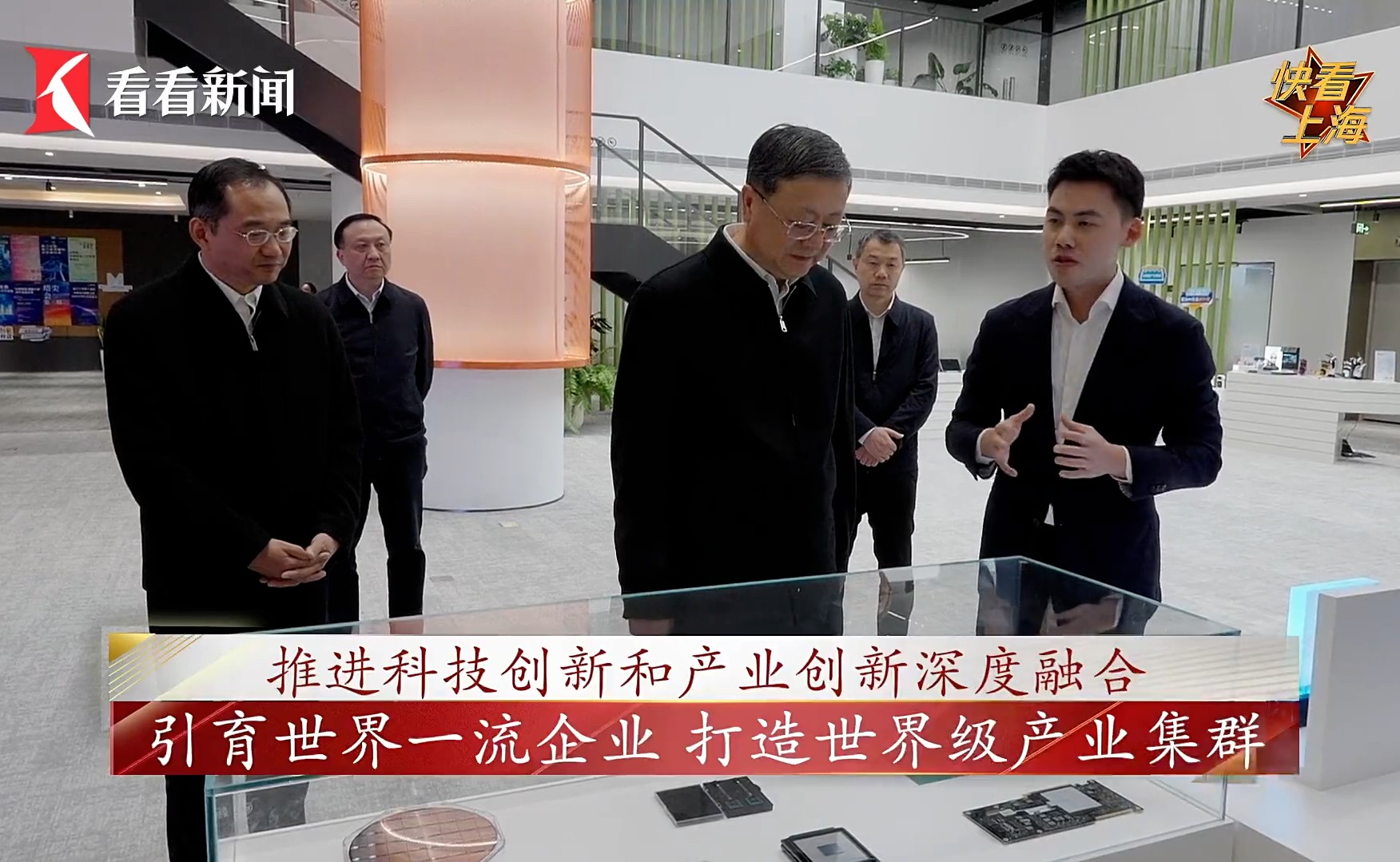
At this year's 5th "Gathering Talents" Global Innovation and Entrepreneurship Summit, a chip company from Zhangjiang stood out from tens of thousands of outstanding innovation projects worldwide with its disruptive and innovative Lightstandard, winning the highest honor of the competition—the only "Golden Gathering Award" in the Future Intelligence track. Wu Wei, Executive Vice Mayor of Shanghai, presented the award to the company.
This company is Lightstandard.Behind the award is not only the leap of optical computing chips from the laboratory to industrial applications, but also a sign that China's high-end AI computing chips have broken free from dependence on advanced processes and imported equipment.
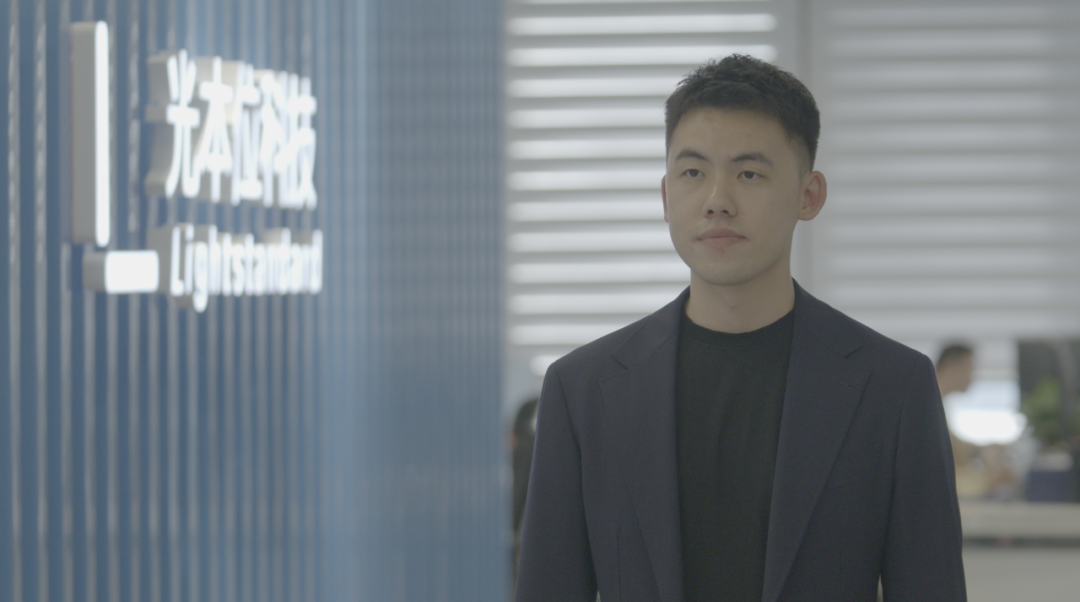
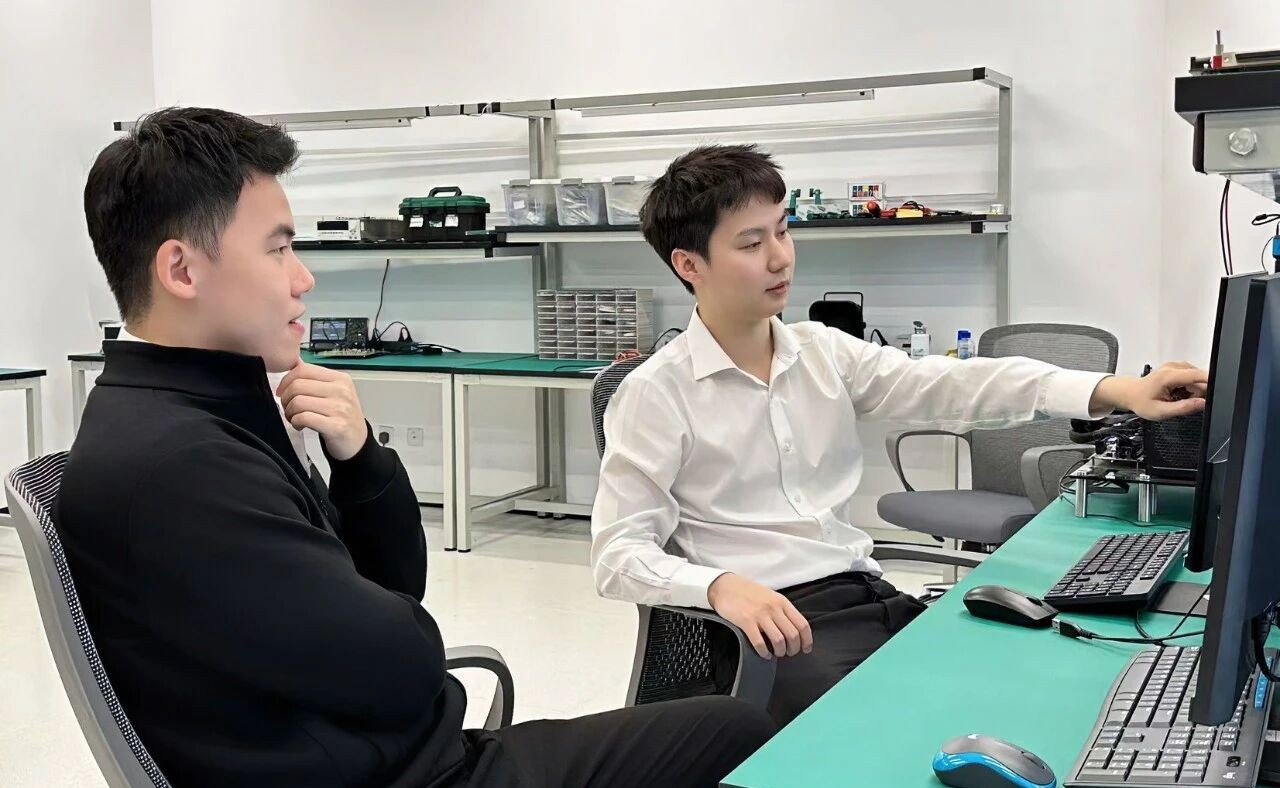
Xiong Yinjiang, co-founder of Lightstandard Technology
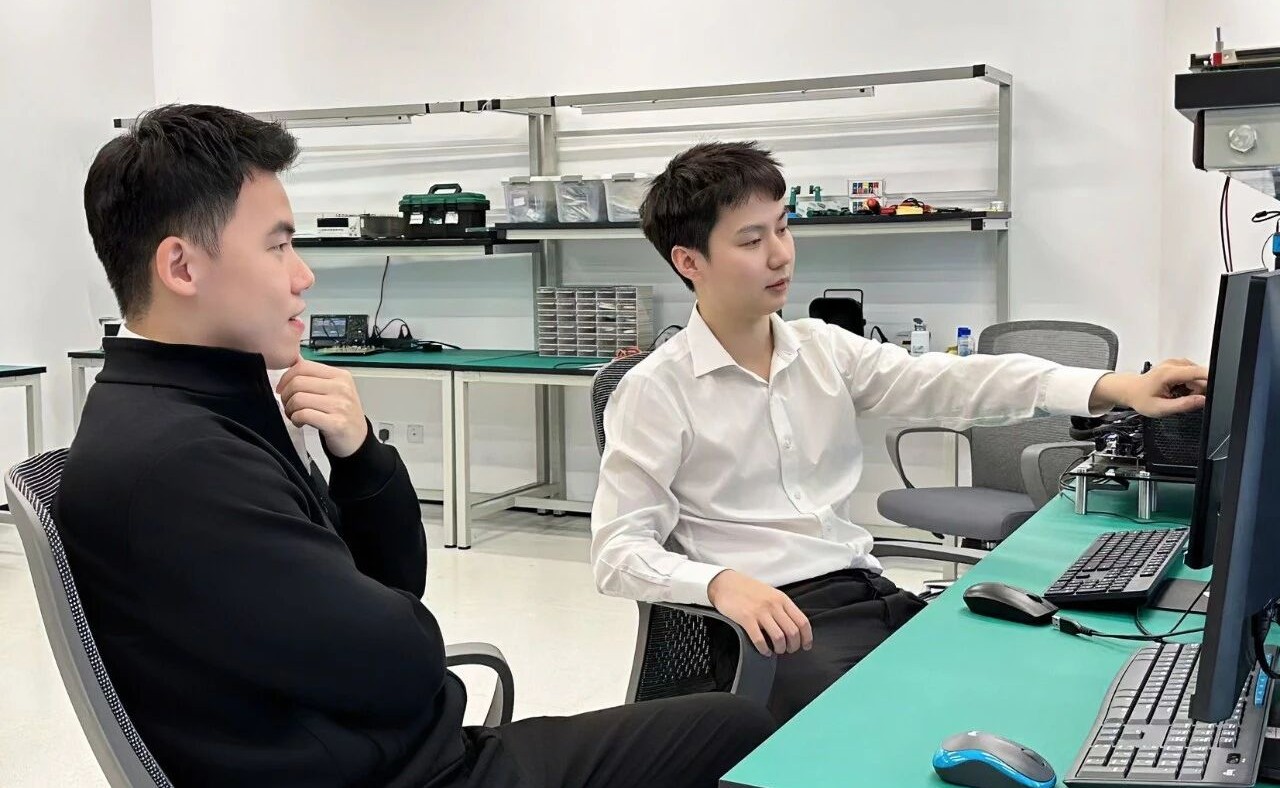
The story of this innovation was written by two young men under the age of 30. Three years ago, Xiong Yinjiang, a graduate of the University of Chicago, shut down his startup in the United States, while Cheng Tangsheng suspended his doctoral studies at Oxford University. The two friends resolutely chose to return to China and found Lightstandard.
In just two years, they successfully fabricated a 128×128 matrix-scale optical computing chip, breaking through the commercial-grade technical threshold for the first time globally.

The Computing Power Dilemma:
The failure of Moore's Law creates opportunities for "alternative strategies".
What is an optical computing chip? Why are optical computing chips needed?
In recent years, as semiconductor technology has approached its physical limits, Lightstandard, which uses photons instead of electrons for information processing, has become a new focus for breaking through the bottlenecks in computing power growth and energy efficiency ratios globally.
For decades, computing power growth has consistently followed Moore's Law, relying on process technology advancements from 14 nanometers and 7 nanometers to 5 nanometers and even 3 nanometers. However, as the process technology has progressed to the 3-nanometer node, physical limitations such as quantum tunneling have become increasingly prominent, making it extremely difficult and costly to further shrink transistor size.
“Moore’s Law is gradually becoming obsolete,” Xiong Yinjiang stated bluntly. “The difficulty and cost of improving the performance of electronic chips are increasing exponentially.”
Meanwhile, global demand for AI computing power continues to surge, with large-scale model training heavily reliant on high-end GPUs. The concentration of advanced process capacity and high supply chain barriers further drive up computing costs and supply risks. For China's semiconductor industry, if it continues to chase after traditional electronic chips, it will have to directly confront the process, ecosystem, and supply chain barriers built by giants like TSMC and Nvidia.
Against this backdrop, optical computing chips are seen as a technological direction that could enable a "leapfrog development".
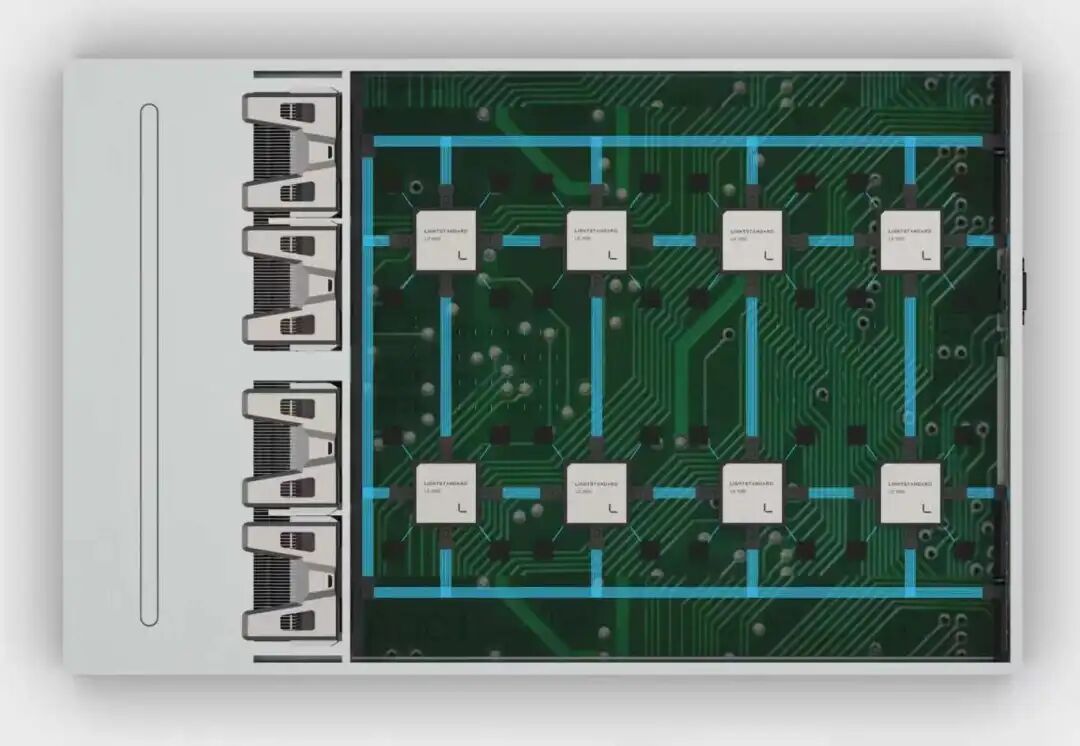
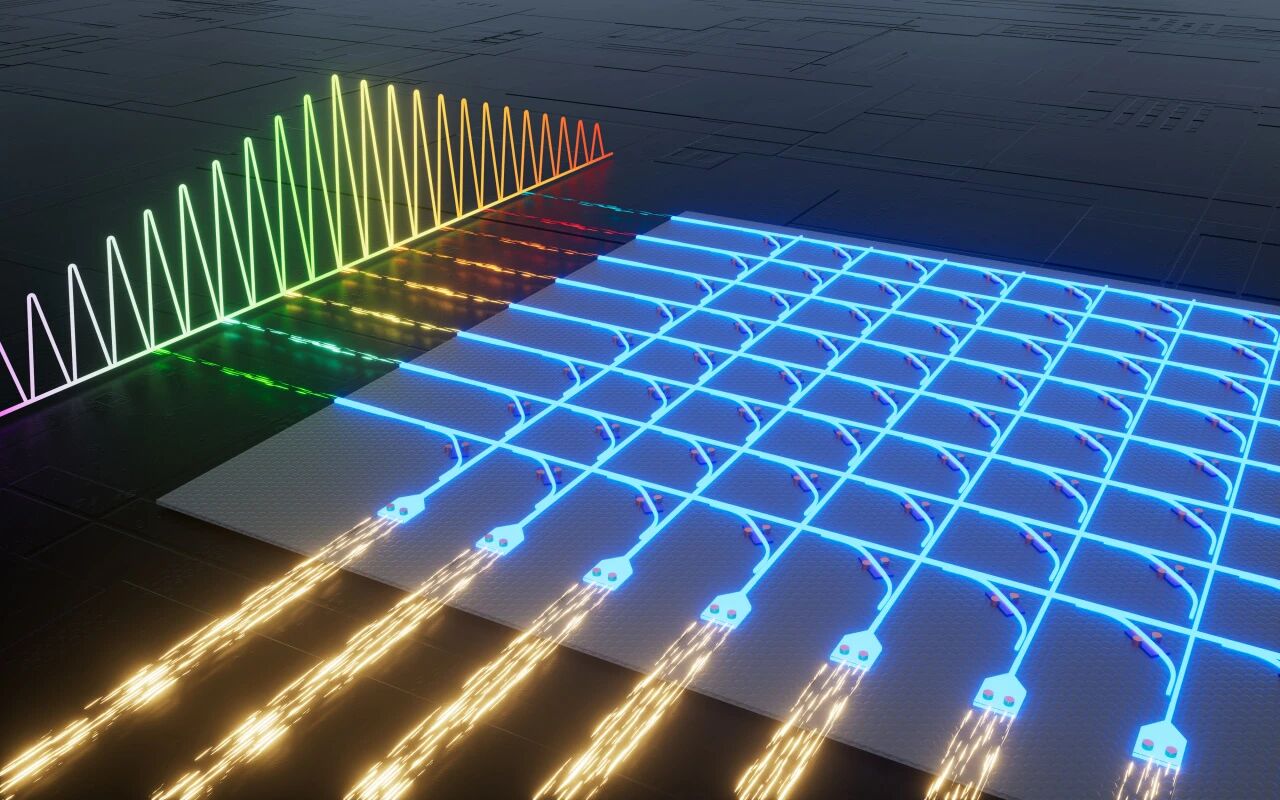
Optoelectronic Fusion Computing System of Lightstandard
"Optical computing chips can solve these pain points." According to Xiong Yinjiang, during transmission, optical computing chips have no thermoelectric effect and extremely low loss, with an energy efficiency ratio about 10 times that of electrical chips. Secondly, optical computing chips transmit at the speed of light, and Lightstandard technology uses phase change materials as a platform, enabling continuous adjustment and controllability. In terms of information density, optical computing chips can use multiple wavelengths of light to perform parallel operations simultaneously without interference, thereby multiplying computing power.
The optical computing chip market is heating up; will it be the "new energy vehicle" of the AI era?
In response, Xiong Yinjiang offered a positive yet cautious analogy. He cited the industrial transformation between gasoline-powered vehicles and new energy vehicles as an example. The core of performance competition in the former focuses on the number of engine cylinders and displacement, while new energy vehicles have completely restructured the competitive dimension—the focus of competition has shifted to range, intelligence, and cost. This is highly consistent with the logic of optical computing chips revolutionizing traditional electrical chips.
However, the market logic for the two is not entirely the same. New energy vehicles are replacing the existing market share of gasoline vehicles, while AI computing chips in China are still in a phase of rapid growth. "This is a much bluer market," Xiong Yinjiang emphasized. "There are many players in the field of electronic chips, but globally, there are only a handful of optical computing companies with the capability for large-scale deployment."
Based on this assessment, in 2022, two friends with complementary technical backgrounds joined forces to start a business. Cheng Tangsheng studied under Harish Bhaskaran, a Fellow of the Royal Academy of Engineering, at Oxford University, and led and participated in the research and development of phase change material optical computing chips; Xiong Yinjiang focused on AI algorithm research and commercialization at the University of Chicago, and personally experienced the computing power bottleneck in large model training. The two co-founded Lightstandard, dedicated to promoting optical computing from the laboratory to industrial applications.

Key breakthrough:
The first commercially available optical computing chip breaks through industry bottlenecks.
In its early days, Lightstandard Technology faced the severe test of "life or death depending on the tape-out" right from the start.
When the company launched in April 2022, its funds were only enough to support one tape-out. Fortunately, its core technology and the potential of the industry quickly gained recognition from investors. In less than six months, the company completed its seed round of financing, and subsequently secured angel and angel+ rounds of financing, attracting more than 10 well-known investment institutions such as Yunqi Capital, Frees Fund, Xiaomiao Langcheng, and Qiji Venture Capital.
"As soon as we received some funding, we immediately invested it in R&D and tape-out," Xiong Yinjiang told Zhang Tongshe. In the early stages of the startup, product development and technology iteration were always the highest priority tasks.
With intensive investment, the team spent three to four months just refining the simulation and design scheme. They focused their efforts on the core technical bottlenecks, tackling challenges from multiple dimensions, including the selection of phase change materials, optimization of optical device structures, and innovation of chip architecture. Ultimately, they achieved a significant improvement in computing efficiency and accuracy while reducing transmission loss and shrinking device size.
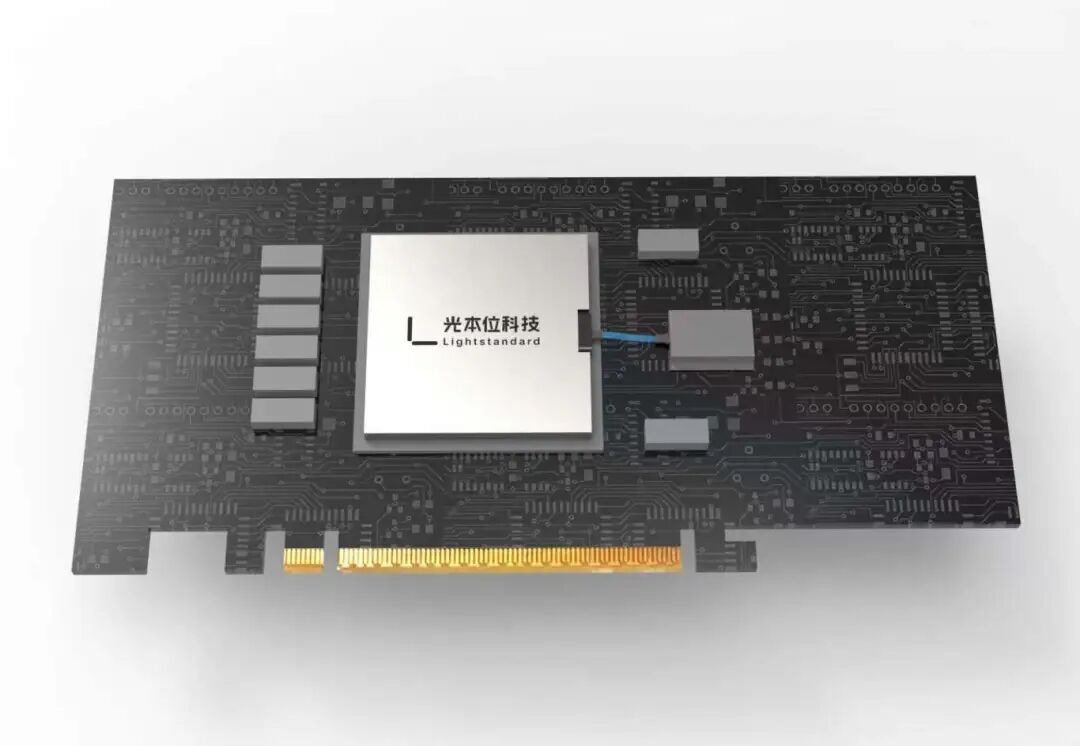
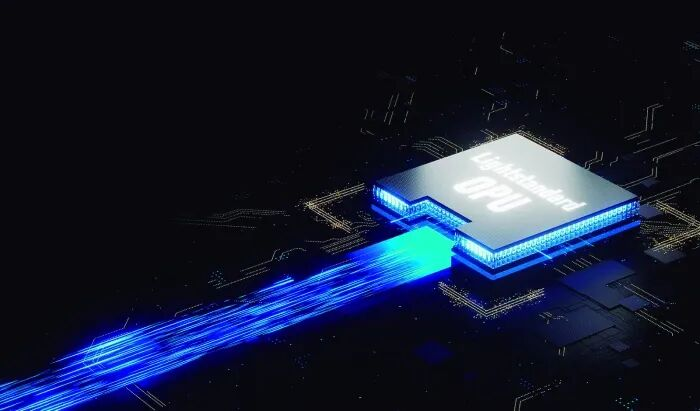
Optoelectronic Fusion Computing Card of Lightstandard
In June 2024, the company achieved a key breakthrough: it successfully taped out a 128×128 matrix-scale optical computing chip, which was regarded by the industry as the world's first optical computing chip to reach commercial standards , and also became a "critical point" in the commercialization process of optical computing. This achievement successfully broke through the upper limit of 64×64 matrix size of global optical computing chips since 2021.
From 4,096 computing nodes in a 64×64 matrix to 16,384 nodes in a 128×128 matrix, the number may seem to have only quadrupled, but the requirements for process precision, production yield, and packaging and testing technology have increased exponentially. "Domestic foundries were initially very hesitant," Xiong Yinjiang recalled. "Previously, the industry generally focused on small-scale chips, and products with tens of thousands of nodes lacked mature yield control experience, which was a completely new challenge." The packaging and testing difficulty of this 10,000-node optical computing chip was so high that it was even evaluated by the industry as "worthy of being nominated for a science and technology progress award."
At this critical stage of technological breakthroughs, capital continues to pour in and empower the company. In the first half of this year, Lightstandard disclosed the completion of another round of financing, led by Dunhong Asset Management, with follow-on investments from state-owned funds such as Pudong Science and Technology Angel Fund of Funds, Zhangjiang Science and Technology Investment, and Suzhou Future Angel Industry Fund. "The injection of funds from state-owned funds is crucial, ensuring R&D investment and allowing us to calmly balance the pace of technological iteration and commercialization," said Xiong Yinjiang.

Ecological layout:
Establishing a presence in Zhangjiang will accelerate commercialization.
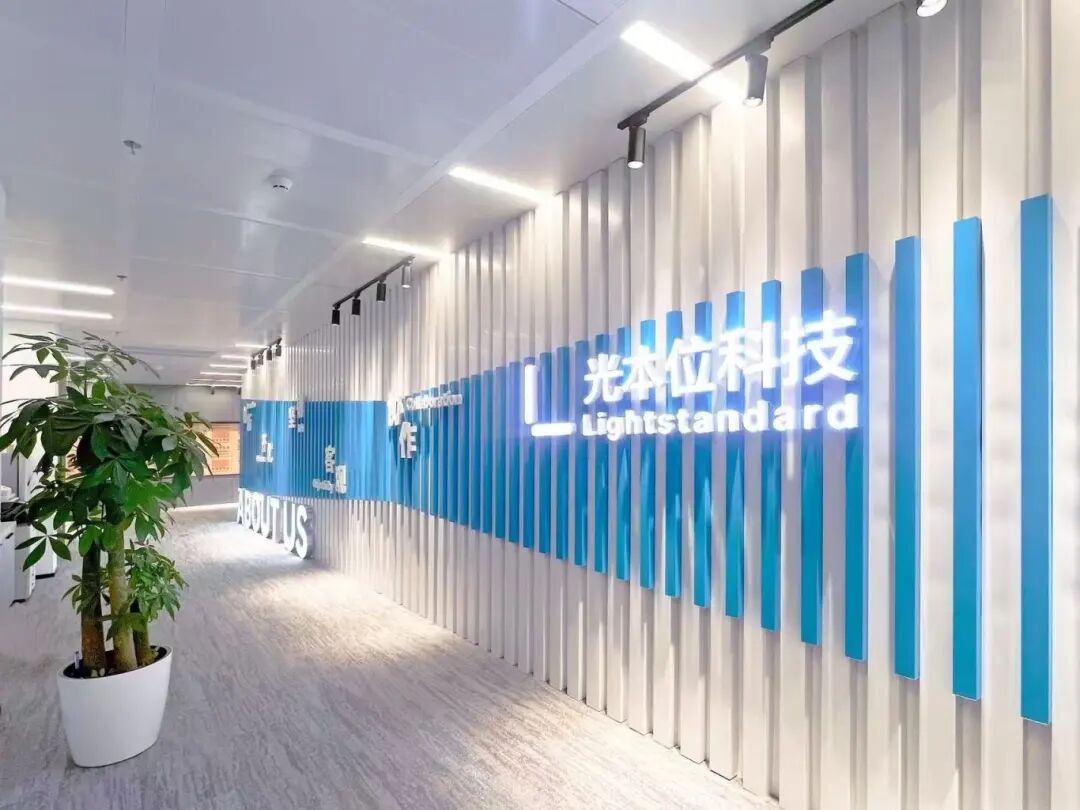
Lightstandard's office is located in the Moli Community.
In April 2025, Lightstandard Technology officially established its headquarters in the "Modal Community" in Zhangjiang.
Choosing Zhangjiang reflects Lightstandard's precise consideration of the optical computing industry ecosystem. "The core resources we need are all gathered here," Xiong Yinjiang explained. The clustering effect of tape-out, packaging, and EDA, along with a dense potential customer base, has built an "instantaneous collaboration" industrial ecosystem, significantly reducing the company's technology transfer and marketing costs.
After establishing its headquarters in Shanghai, Lightstandard has formed a dual-city layout of "Shanghai + Suzhou," leveraging the industrial advantages of both cities to accelerate technology transformation and product iteration: the company has completed the co-packaging test of 128×128 optical computing chips and electrical chips, and is about to launch the first-generation optoelectronic converged computing card; the 256×256 optical computing chip has entered the tape-out stage, and the second-generation optoelectronic converged computing card is expected to be launched to the market in 2026; the core design of the higher-specification 512×512 optical computing chip has also been initiated.
Xiong Yinjiang has clearly designated 2025 as the first year of commercialization for the company's products and has already identified three core customer groups for tiered breakthroughs.
Internet giants such as BAT (Baidu, Alibaba, Tencent), ByteDance, and Meituan belong to the first category. These customers have strict procurement standards, directly benchmarking against international manufacturers such as NVIDIA. Their cooperation is highly strategic and forward-looking, jointly planning the future computing power architecture.
Large model companies like Zhipu and MiniMax fall into the second category. These clients, while of relatively moderate size, have clearly defined and highly personalized needs, often requiring in-depth customization and joint optimization. "Large companies typically struggle to provide dedicated support, which is precisely our opportunity," Xiong Yinjiang points out.
The third category consists of intelligent computing centers built by local governments or central state-owned enterprises. Under the strategic backdrop of self-reliance and controllability of AI computing power, the construction of intelligent computing centers across the country is accelerating, forming a stable source of demand. According to industry data, the domestic cloud-based AI computing power market has reached approximately 600 billion yuan, and is expected to exceed one trillion yuan in the next two years.
As the interview concluded, the sunlight outside the window remained abundant, and Xiong Yinjiang's tone was firm and powerful: " What we are doing is a world-class undertaking that can achieve 'leapfrog development,' and the responsibility and mission to promote the independent control of China's high-end AI computing chips have been deeply imprinted in the company's DNA from the very first day of our entrepreneurship."
Countless photons travel through this city every day, carrying the mission of illumination and warmth; and in this office in Zhangjiang Moli Community, the team at Lightstandard Technology is giving photons new value—breaking through the bottlenecks in computing power growth and energy efficiency ratio with optical computing chips, undertaking the new mission of breaking through the barriers of domestic computing power technology.
Recommended News
Recommended News
Recommended News