The following article content is sourced from Zhang Tongshe.
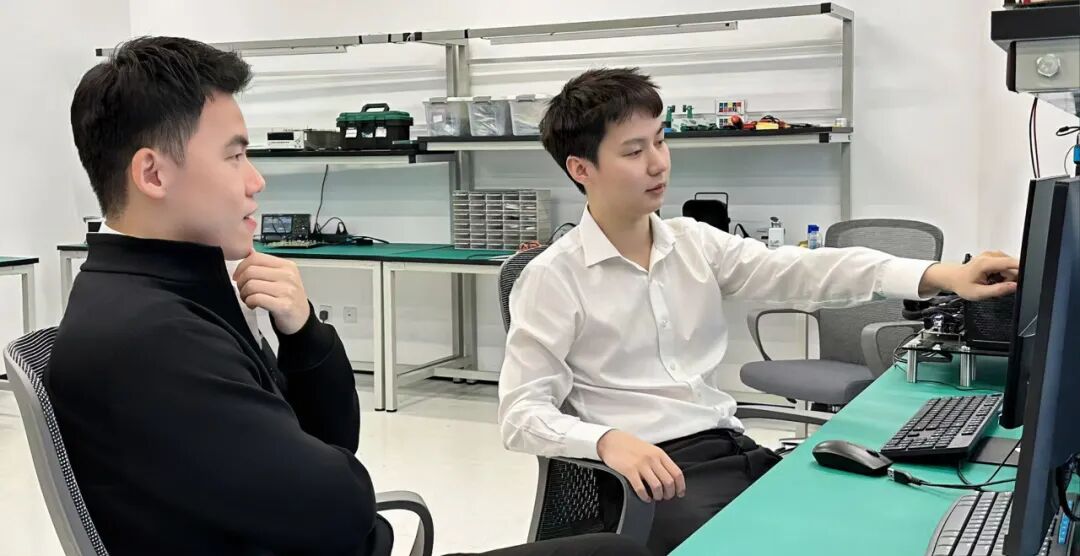
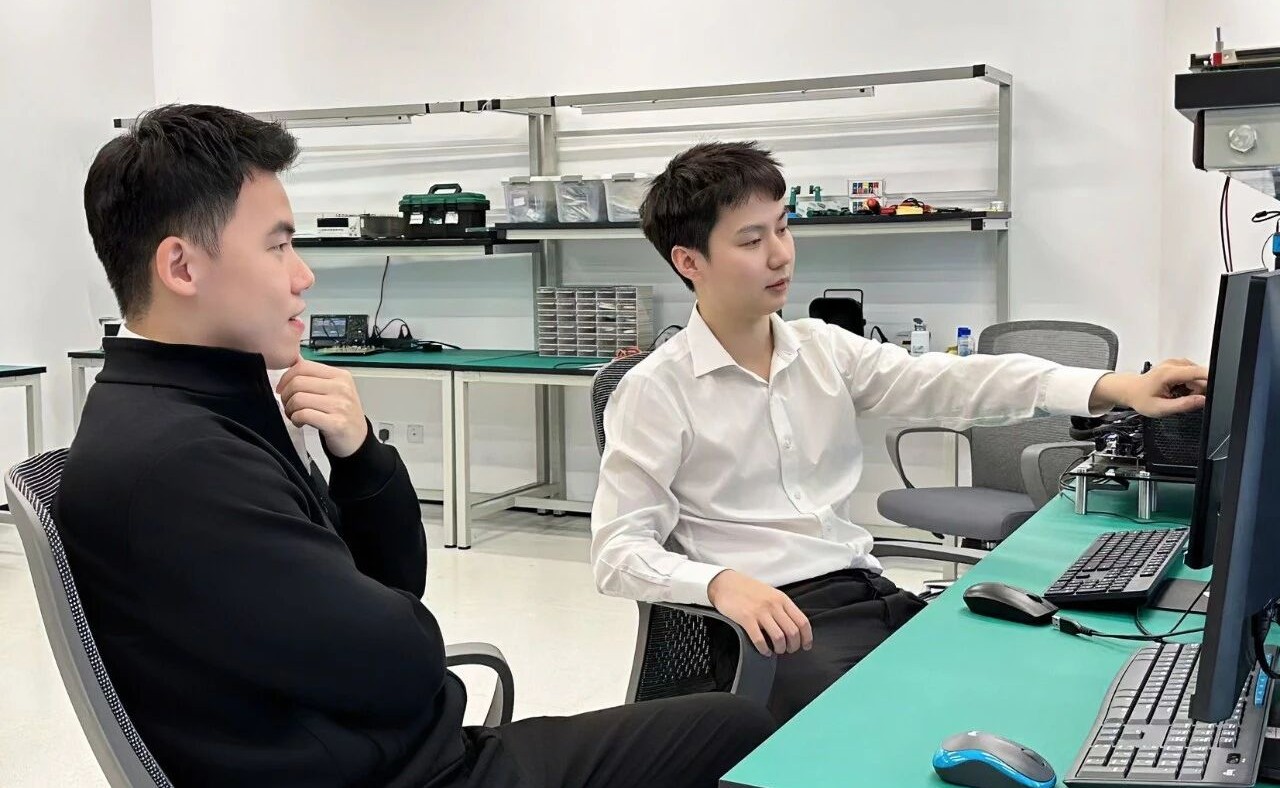
The two co-founders of Lightstandard are Xiong Yinjiang (left) and Cheng Tangsheng (right).
In the process of the digital wave reshaping the global industrial landscape, the explosive growth of artificial intelligence applications is reshaping the boundaries of productivity with unprecedented force. As the core infrastructure supporting this transformation, the tension between supply and demand for computing power is gradually becoming an important bottleneck affecting the continuous upgrading of industries.
With Moore's Law nearing its physical limits, the performance improvement rate of traditional electronic chips has slowed significantly. In contrast, the demand for AI computing power doubles every 3.4 months. This supply-demand imbalance directly leads to a surge in data center energy consumption. The International Energy Agency's "Energy and AI" report shows that, for example, OpenAI's GPT-4 data model consumed 42.4 gigawatt-hours of electricity during its 14-week training period, averaging 0.43 gigawatt-hours per day—comparable to the daily electricity consumption of 28,500 European and American households. Globally, data center power consumption reached 415 terawatt-hours in 2024 (1.5% of global electricity consumption), and this figure is projected to double to 945 terawatt-hours by 2030.
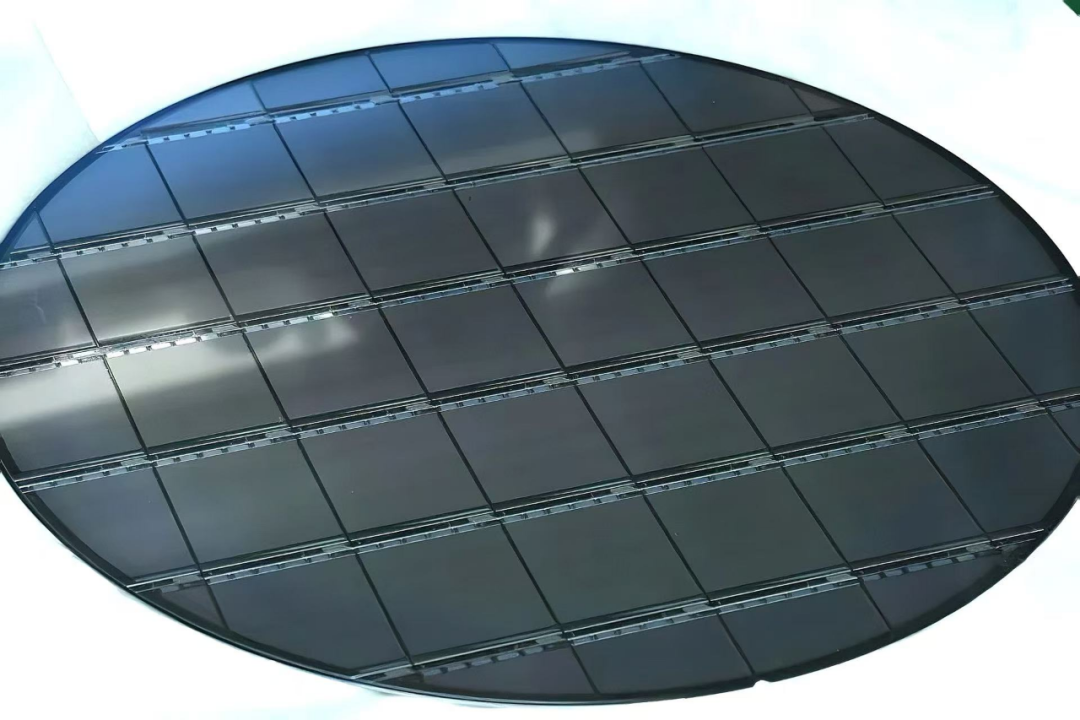
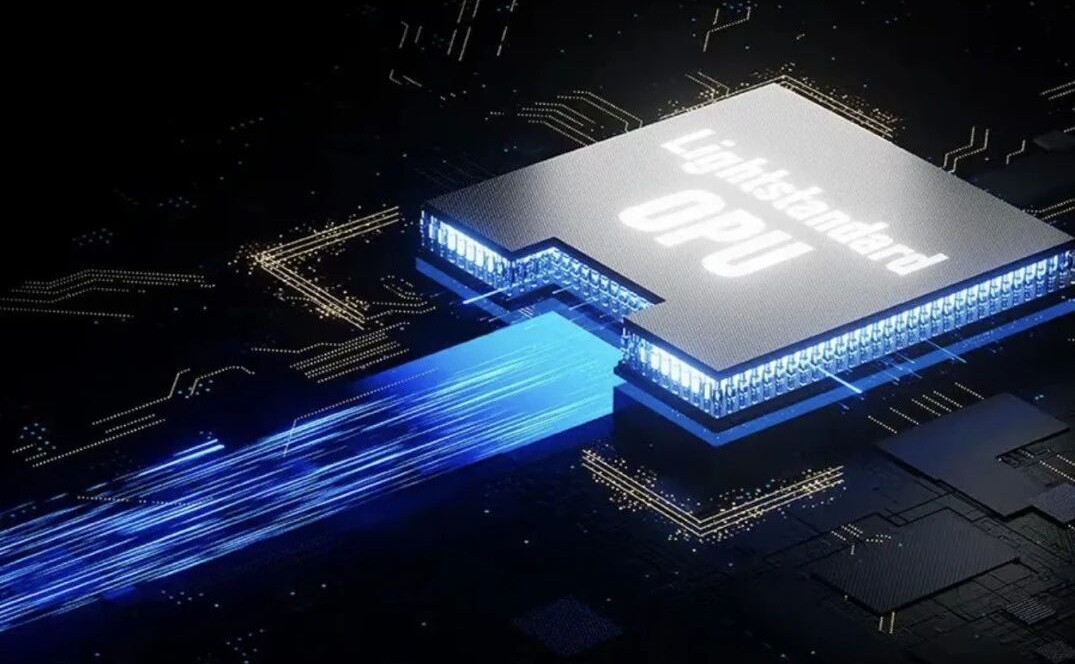
128*128 matrix-scale optical computing chip
In this context, optical computing, as a new computing paradigm, is gradually entering the industry's field of vision. Computing methods that use light as the information carrier, with their inherent advantages such as high-speed light transmission, high computing power, and low power consumption, have become an important direction for breaking through the computing power bottleneck. At this critical juncture of the computing power revolution, Lightstandard has emerged, becoming a significant force driving the commercialization of optical computing with its innovative technology route of "silicon photonics plus heterogeneous integration of phase change materials." This company, founded by two post-95s returnees, successfully taped out the world's first 128×128 matrix-scale optical computing chip in June 2024. This not only broke through the matrix-scale bottleneck that had plagued the optical computing industry for many years, but also propelled optical computing from the laboratory to product-level applications with its in-memory computing architecture, exploring a new computing paradigm for the next generation of computing power competition.
An eight-year-long commitment to entrepreneurship among young tech enthusiasts
Eighteen-year-old Xiong Yinjiang and seventeen-year-old Cheng Tangsheng met while teaching in a Qiang village in Nanbaoshan, Sichuan. One night, the two chatted while huddled together on a makeshift bed. Cheng Tangsheng's comment, "I want to start a technology company," resonated with a thought that had been buried deep in Xiong Yinjiang's heart. The seed planted by this encounter quietly grew over the years.
Three years later, the two collaborated on an ecological governance project in Inner Mongolia, leading teenagers to experience firsthand how technology can change the environment. Although the project itself was educational, this experience further solidified their consensus on "addressing real problems with innovative technology": truly meaningful entrepreneurship must address the core needs of the industry and achieve a breakthrough from scratch.
In the following years, the two pursued their academic careers separately. Cheng Tangsheng went to Oxford University to study under Harish Bhaskaran, a Fellow of the Royal Academy of Engineering, and led and participated in the research and development of phase change material optical computing chips and new ultra-low power nano-phase change materials at Oxford University. Xiong Yinjiang, on the other hand, focused on the research and commercialization of AI algorithm technology at the University of Chicago, personally participating in early large model inference/training, and deeply felt the limitations of existing computing paradigms in terms of computing power and energy efficiency.
2021 marked a pivotal turning point. Cheng Tangsheng achieved a breakthrough in the laboratory, realizing large-scale matrix photonic in-memory computing using phase-change materials; around the same time, Xiong Yinjiang discovered in practical applications that the computing power requirements for AI training were surging, and the energy consumption cost of existing computing paradigms had become a significant bottleneck. Through frequent transoceanic calls, they realized that optical computing, with its energy efficiency thousands of times higher than that of electrical chips in matrix operations, perfectly matched the enormous computing power demands of AI.
Based on these technological insights and market assessments, they chose the "optical computing + AI" track. This decision stemmed from two considerations: first, the global technology roadmap is not yet finalized, and China has a first-mover advantage in the optical communication industry chain; second, the ceiling for optical computing is high enough, and it is by no means a "competitive market" limited to niche areas.
Cheng Tangsheng and Xiong Yinjiang returned to China one after another, and in April 2022, Lightstandard was officially established. The two reached a consensus in the early stages of their entrepreneurship: "What we want to do is not to make money in the short term, but to promote optical computing from the laboratory to industrialization and become a key participant in the next generation of computing power revolution."
The first round of tape-out determines the project's survival
In its early stages, Lightstandard faced a critical test: the very first tape-out would determine the project's survival. When the company launched in 2022, its funding was only enough to support one tape-out. From April onwards, the team devoted themselves entirely to chip design, spending three to four months just to complete the simulation and design scheme. During this period, due to limited resources, the two founders and core R&D personnel were stationed in the laboratory. Ultimately, they successfully completed the functional verification of the small matrix chip, ensuring that key components and overall performance were successfully implemented.
"The semiconductor industry is a long-cycle industry. In the early stages, it's crucial to prove the technological feasibility and, more importantly, to convince the market of its commercial value." Cheng Tangsheng's statement encapsulates the dual challenges of starting a hard-tech business. After choosing a direction, the real "hard battle" has just begun. Matrix size and core device performance are key factors affecting the computing power and efficiency of optical chips. The team conducted comprehensive optimizations across phase-change materials, core optical devices, and optical chip architecture, successfully reducing transmission losses and shrinking device size while significantly improving computing efficiency and accuracy. Cheng Tangsheng explained, "Increasing the size of the optical chip matrix directly improves computing power and efficiency, but it also brings increased optical losses and issues related to the stability and accuracy of on-chip optical devices. Only when even the weakest link in the chain meets the requirements can the overall system operate efficiently."
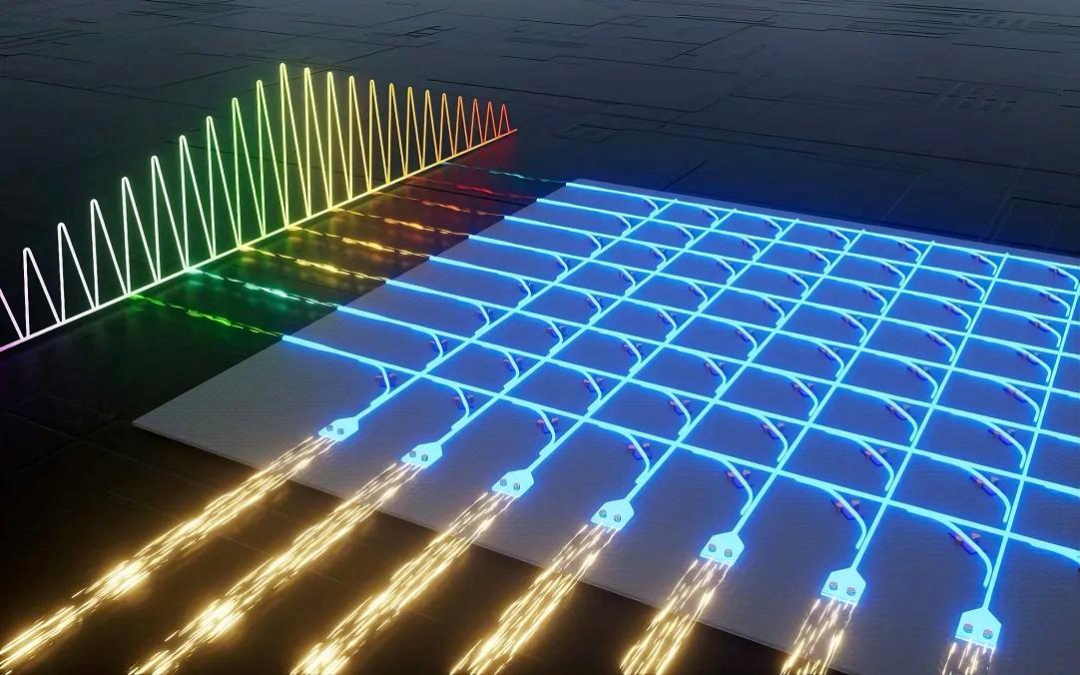
Crossbar technology roadmap demonstration
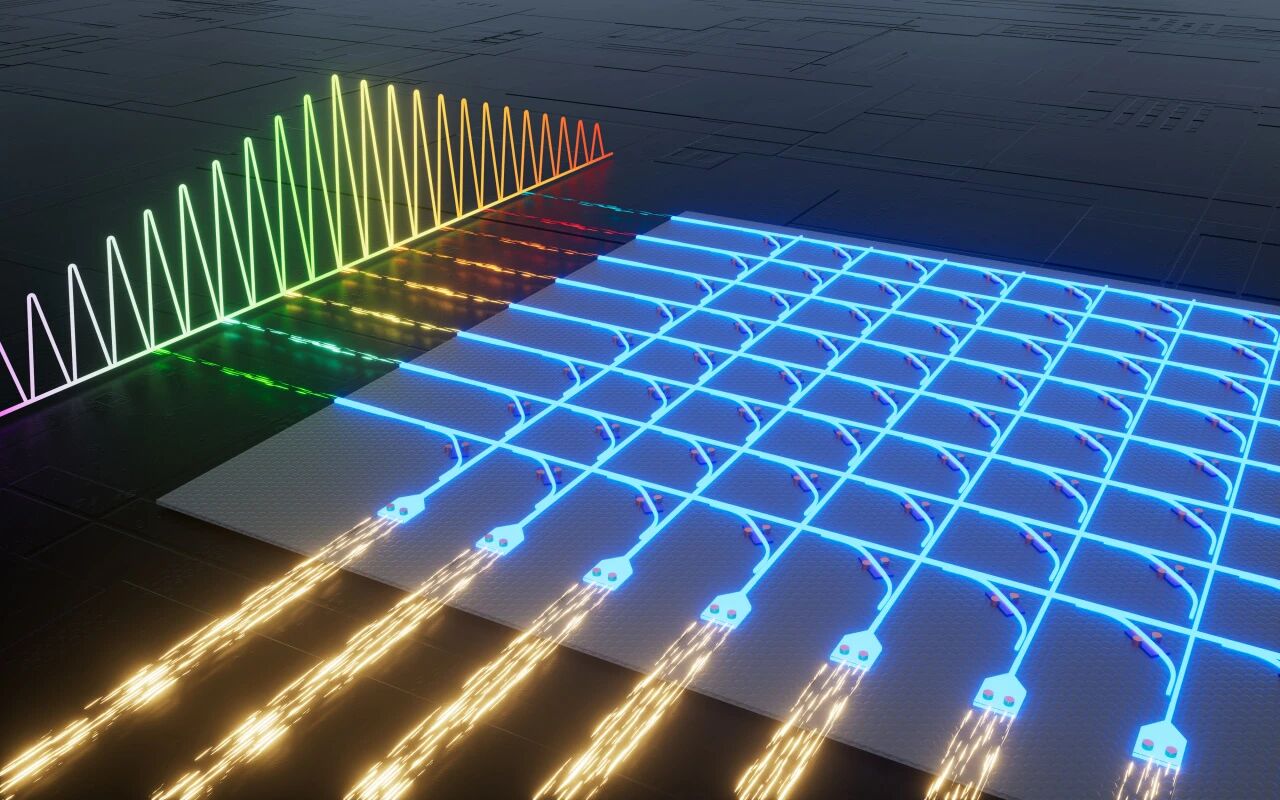
While expanding the matrix size, the team improved chip area utilization through the innovative design of the Crossbar photonic matrix computing structure. This design allows the 128×128 chip to integrate over 16,000 nodes, with each node being programmable in real time, breaking the limitation of traditional optical chips that "can only handle a single task with fixed weights." In June 2024, this chip successfully completed tape-out, becoming the world's first optical computing chip to meet commercial standards. 128×128 is considered by the industry to be the "critical point" for the commercialization of optical computing. This is because a matrix size smaller than 128×128 results in insufficient computing power and low density, making it unsuitable for complex applications such as large-scale model inference/training.
Forward-looking planning for product commercialization
Currently, Lightstandard is taking a crucial step towards product commercialization. Cheng Tangsheng explained that the company's first-generation optoelectronic converged computing card is about to be sampled to downstream users. At the same time, the tape-out plan for optical computing chips with a matrix scale of 256×256 and larger is also progressing rapidly. More importantly, the company has already built a complete optical computing product system.
In terms of supply chain linkage, Lightstandard has chosen a "two-way rooting" strategy. Upstream, it has deep cooperation with multiple silicon photonics production lines in China, covering the entire range from 8-inch to 12-inch wafers. By securing advanced manufacturing resources in advance, it ensures process stability and supply chain control. Downstream, it is simultaneously collaborating with internet giants to jointly develop customized products and participating in the construction of standardized local government smart computing centers.
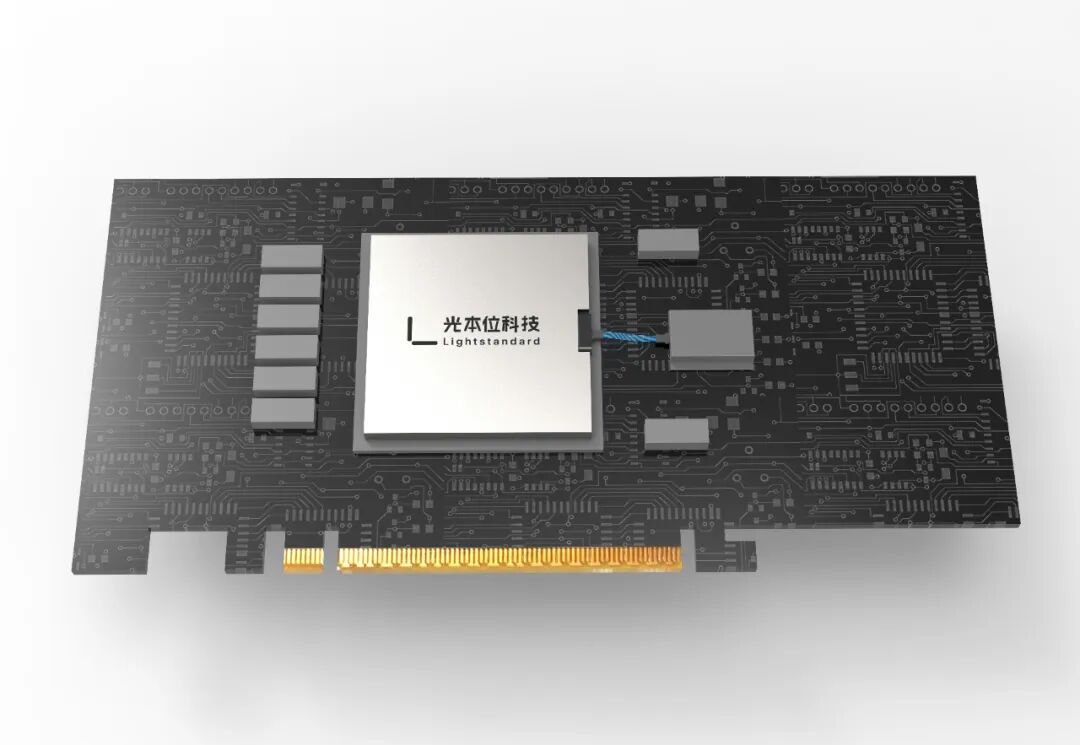
Lightstandard's Optoelectronic Fusion Computing Card
The forward-looking strategy for product commercialization is also reflected in Lightstandard's financing strategy. Xiong Yinjiang believes that in the long-cycle development of optical computing, cooperation with capital that understands the laws of technological evolution and recognizes long-term value is particularly important. In his view, investors with industry knowledge and a long-term perspective can better accompany companies through the entire process from technology research and development to large-scale commercialization.
In June 2023, Lightstandard secured angel round investment from investors including Yunqi Capital, Frees Fund, Xiaomiao Langcheng, and Qiji Venture Capital. Eight months later, it completed its angel+ round of financing, accelerating the tape-out process of its 128×128 chip. In December 2024, the company reached a strategic partnership with a leading domestic internet company possessing abundant application scenario resources, achieving deep ecosystem synergy. In June 2025, a new round of financing led by Dunhong Asset Management, with participation from state-owned funds such as the Pudong Science and Technology Angel Fund of Funds, further integrated the industrial chain resources in Shanghai, Suzhou, and other locations, providing a solid guarantee for subsequent mass production ramp-up. This signifies that Lightstandard has taken the lead in establishing a complete "materials-design-manufacturing-application" chain capability in the field of optical computing.
It is expected to win the right to define a new AI computing paradigm
Currently, optical computing chips still rely on electrical drives. Optical and electrical components can work together through analog chips: optical chips handle linear AI calculations, while electrical chips are responsible for scheduling and nonlinear processing, forming a precisely coordinated optoelectronic fusion computing system.
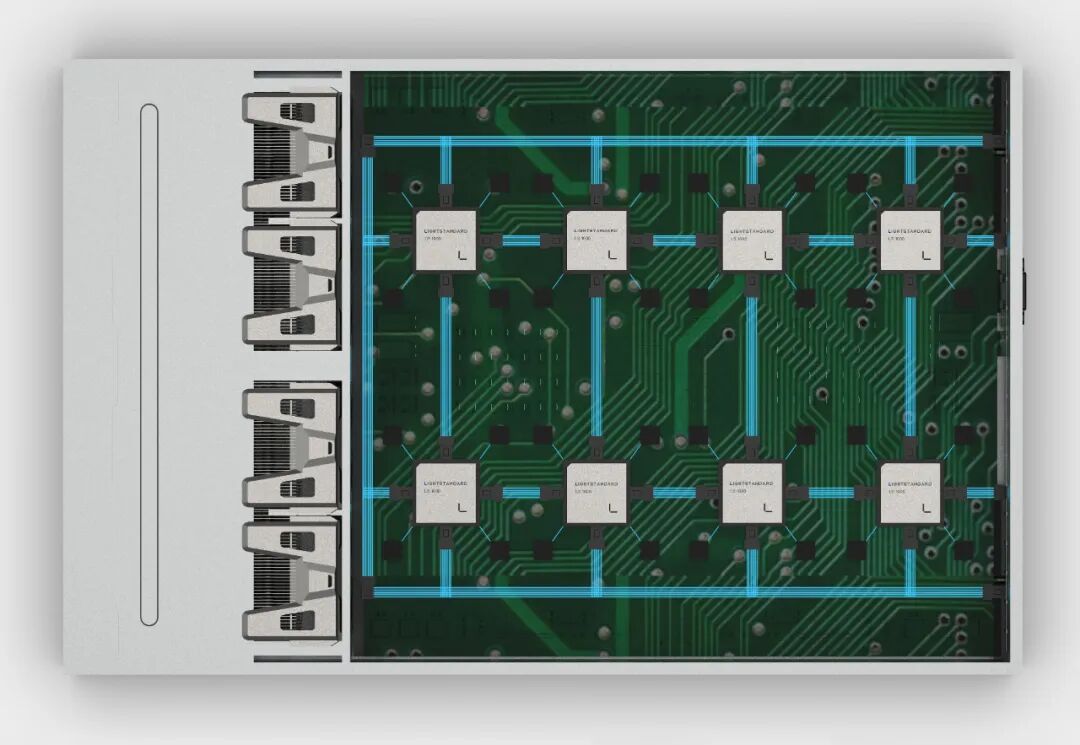
Lightstandard's optoelectronic integrated computing system
In an interview, Xiong Yinjiang said, "We hope to involve light more and more in the entire computing architecture." Although achieving "all-optical computing" is still a long-term vision, at this stage, continuously increasing the proportion of optical computing and optimizing computing efficiency and reducing system energy consumption through optoelectronic synergy has become an inevitable direction for building the next generation of green and efficient intelligent computing infrastructure.
Breakthroughs in optical computing could turn low-carbon or even zero-carbon AI large-scale model inference/training from fantasy into reality—China is poised to achieve a "leapfrog development" in the battle for the right to define a new AI computing paradigm.
In the near future, intelligent computing centers may no longer rely on massive amounts of electricity to operate, significantly reducing heat dissipation pressure and operating noise, evolving into efficient "digital hearts of the city" and coexisting with the city in a more user-friendly manner. In the field of autonomous driving, the nanosecond-level processing speed of optical chips will enable vehicles to analyze road condition data more quickly. In complex scenarios such as slippery roads in rainy weather and nighttime driving, the system's environmental perception and decision-making response will be more accurate and efficient, adding important protection for travel safety. In medical imaging centers, optical computing-enabled systems can accelerate model reconstruction and analysis, making it easier to achieve inclusive healthcare with "early detection and early diagnosis".
The industrialization of optical computing is not the end, but the starting point of a new round of AI technology revolution, ushering in an intelligent era of unlimited computing power and controllable energy consumption. When we no longer have to pay expensive energy and environmental costs for computing power, the humanistic value of the intelligent era will also be released.
Recommended News
Recommended News
Recommended News